

20/09/2025
Understanding PCE Classifications
Polycarboxylate Ether (PCE) admixtures represent the most advanced generation of superplasticizers in modern concrete technology. Their molecular architecture allows for significant improvements in water reduction, slump retention, and workability customization compared with traditional admixtures. At HS Company Limited, the product portfolio has been strategically divided into three main categories, namely the High-Range Water Reducer, the High-Range Slump Retention, and the Hybrid type. Each classification is engineered to address specific challenges in construction, ranging from high-strength requirements to long-distance transport and multi-functional demands. This comprehensive guide explains the characteristics of each type and provides insights into how professionals can make informed decisions when selecting admixtures for their projects.
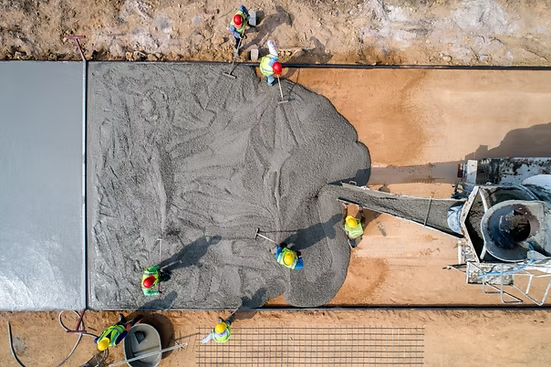
The Science Behind PCE Technology
The strength of PCE admixtures lies in their comb-polymer structure, built on a polyacrylic acid backbone with carefully designed side chains. This configuration disperses cement particles effectively through electrostatic repulsion and steric hindrance, preventing flocculation and releasing water trapped between clusters. The result is a concrete mixture with enhanced hydration, improved density, and optimized workability.
One of the main advantages of PCE is its ability to be customized at the molecular level. By adjusting the backbone composition, side chain length, and molecular weight distribution, admixtures can be tailored for specific functions such as rapid strength gain, extended workability, or a balanced compromise between the two. This versatility explains why PCE admixtures dominate the market for advanced construction chemicals today.
Type 1: High-Range Water Reducer (HRWR) – Maximum Strength
High-Range Water Reducer PCE admixtures focus primarily on reducing water content to the maximum extent while maintaining adequate workability. These formulations typically allow for reductions of 25 to 40 percent compared with control mixes, enabling concrete to reach compressive strengths exceeding 80 MPa. The mechanism behind HRWR involves high-charge density polymers that disperse cement particles intensively, producing strong repulsion and freeing water for hydration.
In terms of performance, HRWR products facilitate dense and durable concrete matrices with improved resistance to chemical attack and permeability. Their slump retention is moderate, usually ranging between 60 and 90 minutes, which means they are most effective for projects requiring immediate placement where maximum strength is a priority. However, the rapid decline in slump compared to other PCE types necessitates careful scheduling of mixing, transportation, and placement.
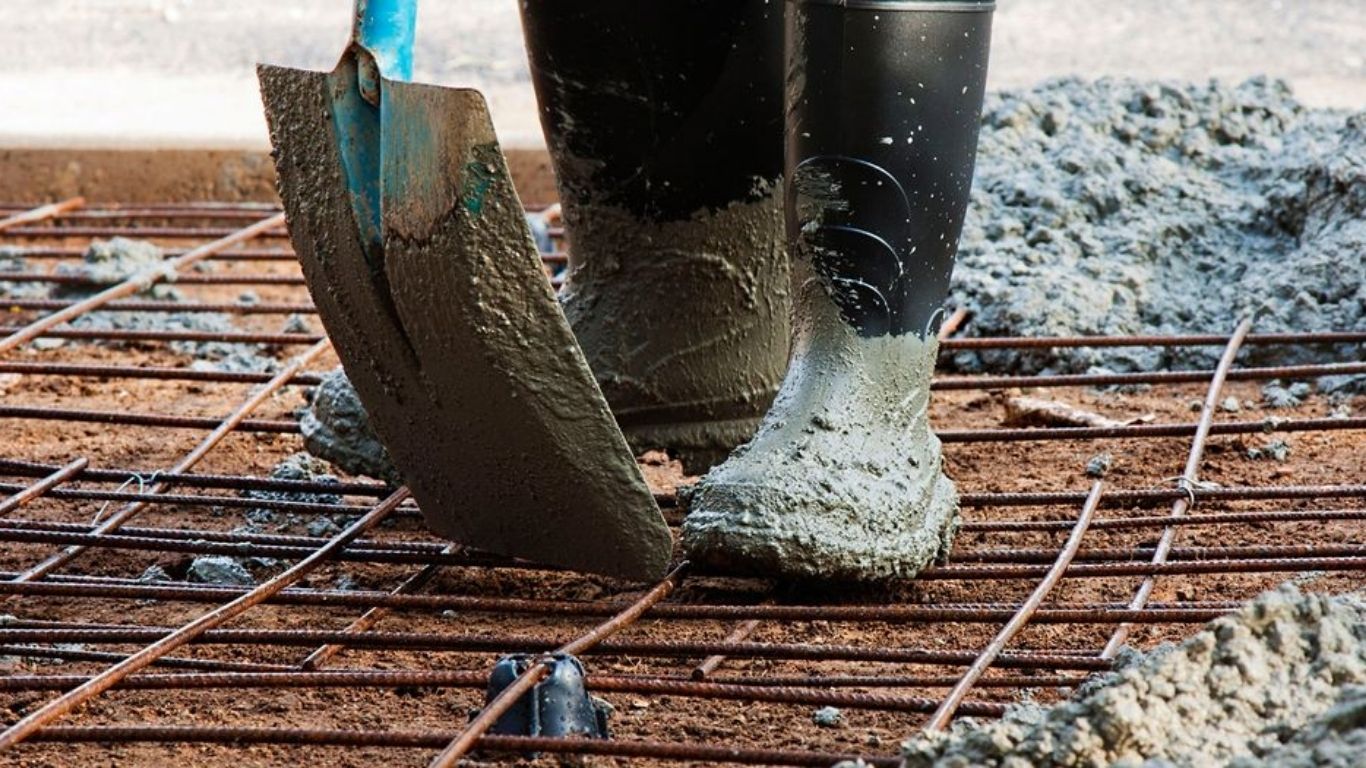
These admixtures are particularly valuable in precast concrete manufacturing, where rapid strength development allows for accelerated demolding and increased efficiency. High-rise construction also benefits, as HRWR improves pumpability and enables slimmer structural dimensions without sacrificing strength. Infrastructure projects such as bridges and tunnels that require exceptional durability also rely on HRWR to optimize performance.
Type 2: High-Range Slump Retention (HSR) – Extended Workability
While HRWR prioritizes strength, the High-Range Slump Retention type is designed to maintain workability over extended periods. Slump Retention PCE admixtures provide significant water reduction, typically 20 to 30 percent, but their main advantage lies in their ability to keep concrete workable for two to four hours.
The underlying mechanism uses time-delayed polymer activation, which continuously replenishes flowability as initial effects wear off. This ensures that concrete remains workable during long transportation, extended placement operations, and in environments with high temperatures where slump loss is accelerated.
These admixtures are particularly suited for ready-mix operations where concrete must travel long distances before placement, for massive pours requiring coordination over several hours, and for complex architectural projects with intricate formwork and dense reinforcement. Hot weather concreting also benefits greatly from HSR, as the formulations prevent premature stiffening and reduce the risk of cracks caused by rapid evaporation.
Type 3: Hybrid PCE – Balanced Strength and Workability
Hybrid PCE admixtures were developed to address projects that require both strong water reduction and extended slump retention in a single solution. By blending polymers from HRWR and HSR, Hybrid formulations achieve a balance of water reduction in the range of 25 to 35 percent while maintaining slump for ninety to one hundred and fifty minutes.
The molecular design of Hybrid PCE is more complex, often incorporating multiple side chain types that activate sequentially during mixing, transportation, and placement. This ensures consistent performance throughout all stages of concrete handling, eliminating the need for multiple admixture systems.
Hybrid PCE is especially beneficial in mixed-use projects that combine precast elements with cast-in-place components, as well as in infrastructure requiring both rapid strength and extended workability. Marine and offshore construction also benefits from Hybrid systems because they reduce the complexity of admixture selection while providing robust performance in harsh environments.
Comparative Overview of PCE Types
The High-Range Water Reducer achieves the greatest water reduction, up to 40 percent, but provides only moderate slump retention of about one hour. The High-Range Slump Retention type reduces water by about 20 to 30 percent but can extend workability for up to four hours. Hybrid PCE offers a balanced performance with water reduction of 25 to 35 percent and slump retention of around one and a half to two and a half hours. In terms of applications, HRWR is most effective in precast and high-strength projects, HSR in ready-mix and long-distance delivery, and Hybrid in mixed or multi-functional projects.
| Type | Water Reduction | Slump Retention | Best Applications | |
|---|---|---|---|---|
| High-Range Water Reducer | 25–40% | 60–90 mins | High-strength, precast, high-rise | |
| High-Range Slump Retention | 20–30% | 2–4 hrs | Ready-mix, large-scale, hot climates | |
| Hybrid | 25–35% | 90–150 mins | Multi-functional, infrastructure |
Supporting Sustainable Construction
Beyond technical performance, PCE admixtures also play a central role in sustainability. By reducing cement demand through efficient water reduction and improving overall hydration, PCE admixtures directly lower CO₂ emissions. They also make it easier to incorporate supplementary cementitious materials such as fly ash and slag. At HS Company, our PCE products are backed by Environmental Product Declarations (EPD), ensuring transparency and compliance with international sustainability standards.

Sustainable development
Conclusion: Strategic Selection for Success
Selecting the right type of PCE admixture depends on project requirements. When maximum strength is the goal, HRWR provides unmatched efficiency. When extended workability is critical, HSR ensures performance across long distances and timeframes. For projects requiring both, Hybrid PCE delivers balanced results.
At HS Company Limited, our comprehensive PCE portfolio is designed to serve the full spectrum of construction needs. With production facilities in Vietnam and the UAE, and distribution across more than 40 countries, HS supplies admixtures that combine innovation, strength, and sustainability. Whether for precast factories, ready-mix operations, or large-scale infrastructure, our solutions transform challenges into competitive advantages.


