

03/12/2025
Introduction: Two Key Formats of Modern Concrete Admixtures
Polycarboxylate Ether (PCE) Superplasticizers — a core category of high-range water reducers (HRWR) — are widely used across modern concrete production due to their exceptional dispersion efficiency, low dosage requirements, and strong workability control. Today, Polycarboxylate Ether admixtures are available in two primary formats: Liquid PCE and PCE Powder, each playing a distinct role in the broader ecosystem of advanced concrete admixtures.
Understanding how these two formats differ in performance, handling behavior, logistics needs, and application suitability is essential for producers scaling their operations efficiently and contractors aiming for consistent high-quality concrete performance.

1. Liquid PCE: Characteristics and Field Performance
1.1 Physical and Chemical Properties
Liquid PCE is typically formulated as a 20–40% active-content water-based solution. It appears as a pale-yellow to amber liquid with complete solubility, enabling immediate dosing without preparation. This format is widely used in Ready-Mix Concrete (RMC) because the polymer is already fully dissolved, allowing faster interaction with cement particles.
1.2 Performance Characteristics
Liquid PCE delivers rapid cement dispersion, high water-reduction efficiency, and reliable slump retention. Depending on molecular structure, water reduction regularly reaches 25–35%, placing it solidly within high-range water reducer (HRWR) standards. The consistency of liquid solutions ensures stable performance across automated batching cycles, contributing to predictable workability and long-term durability.
1.3 Operational Advantages
Liquid PCE offers efficient integration into automated dosing systems, minimizing human error and ensuring precise, repeatable results. Plants operating at high production rates benefit from the rapid handling and immediate activation of liquid superplasticizers, particularly during long-distance transport or time-sensitive placements.
1.4 Limitations
The lower active concentration requires larger storage volumes and results in higher transportation weight. Liquid PCE may also need temperature-controlled storage in cold climates. These logistical considerations can increase the total cost of use in certain applications.
2. PCE Powder: Composition, Functionality & Advantages
2.1 Physical Characteristics
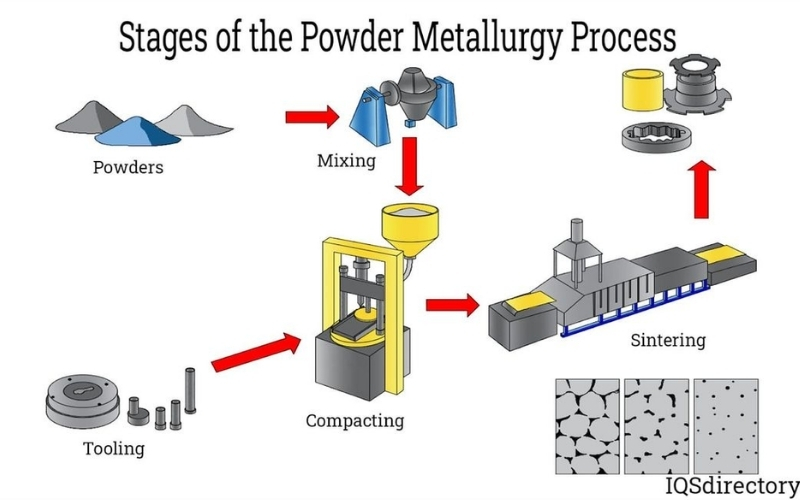
PCE Powder contains significantly higher active content (90–98%) in a free-flowing, spray-dried form. The powder blends efficiently with dry materials and dissolves readily in water when prepared correctly, making it a versatile component for dry-mix production and customized concrete admixture formulations.
2.2 Performance Behavior
Once dissolved, PCE Powder provides water-reduction performance equivalent to liquid PCE. Its compatibility with various cement systems remains consistent, and its controlled particle size enhances dispersion, especially in dry-blended products such as self-leveling compounds, tile adhesives, repair mortars, and engineered grouts.
2.3 Operational Advantages
The concentrated nature of PCE Powder reduces transportation volume and weight, enabling more efficient logistics. Its stability across a wide temperature range and long shelf life make it particularly suitable for export markets, remote sites, and climates with freezing risks. Powder also enables on-demand preparation of liquid concentrations, giving material developers greater formulation flexibility.
2.4 Limitations
Powder requires careful dissolution and handling, including dust management and additional preparation steps. It is less suitable for ready-mix production, where speed and precision of dosing are crucial.
3. Ideal Application Scenarios
3.1 Ready-Mix Concrete
Liquid PCE is the optimal choice for ready-mix concrete. Its immediate solubility and compatibility with automated batching systems ensure consistent results across large production volumes. Slump retention liquid variants are especially valuable for long-haul times.
In addition, the liquid form allows the admixture to disperse rapidly and uniformly throughout the mix, minimizing the risk of particle agglomeration. This ensures more consistent concrete quality across multiple batches. Its exceptional slump retention capability is particularly beneficial for projects requiring extended hauling times. As a result, concrete maintains its workability upon arrival without the need for additional water.
3.2 Precast Concrete Manufacturing
Both forms can serve precast production effectively. Liquid PCE supports rapid turnover cycles, while powder allows producers to fine-tune concentration or create specialized formulations when desired.
In precast facilities, liquid PCE helps shorten mixing duration and accelerate demolding cycles, directly improving daily production output. Powder PCE, on the other hand, is ideal when manufacturers need greater control over dosage or wish to develop customized formulations. This flexibility enables compliance with the specific mechanical and rheological requirements of each precast element.

3.3 Dry-Mix Mortars and Powdered Materials
PCE Powder is essential for dry-mix mortar manufacturing because it integrates directly into powdered blends. When water is added at the job site, the polymer activates and enhances fluidity, cohesion, and leveling performance.
PCE powder disperses efficiently within dry-blend mortar formulations without causing caking or lump formation during mixing. Upon contact with water, the polymer activates immediately, improving flowability, adhesion, and self-leveling characteristics. This is especially advantageous for products such as self-leveling compounds, tile adhesives, and finishing mortars requiring smooth, defect-free surfaces.
3.4 Remote, Export, or Storage-Limited Locations
Powder formats excel in locations with limited infrastructure for liquid storage. They reduce shipping weight, occupy less warehouse space, and remain stable in extreme temperatures.
The powder form is particularly suitable for remote project sites where liquid storage tanks or handling systems are impractical. Its lower transport weight contributes to noticeably reduced logistics costs. Additionally, powder PCE remains stable under wide temperature variations, making it easier to store for extended periods. This stability also makes it an optimal choice for export markets or long-term warehousing.
4. Economic and Sustainability Considerations
Choosing between the two formats involves weighing handling efficiency, transport cost, and production workflow. The liquid version may carry higher shipping and storage costs due to its lower concentration, yet it offers time-saving benefits through direct dosing and automated measurement.
The powdered alternative reduces freight impact and warehouse requirements. Its solid-state stability improves inventory control and minimizes temperature-related risks.
Both forms contribute to sustainable construction practices by enabling lower water-cement ratios and supporting enhanced durability, which can reduce long-term material consumption.
Conclusion: Selecting the Format That Fits Your Operations
Although both formats share the same polymer technology, their performance in practice depends heavily on application environments and operational priorities. The liquid version is ideal for ready-mix and precast facilities requiring speed and dosing precision. The powdered form excels in dry-mix manufacturing, export-focused logistics, and settings where storage efficiency is a key factor.
Understanding the operational strengths of each option empowers producers and contractors to optimize cost, consistency, and overall quality across a wide range of concrete and mortar applications.
FAQ (Snippet-Optimized)
What is the main difference between the liquid and powder formats?
The liquid type is a ready-to-use solution, while the powder is a high-concentration solid that must be dissolved or added to dry-mix formulations. It mainly comes down to convenience versus flexibility—liquid supports fast production, while powder is ideal for blending, exporting, or long-term storage.
Is the powder version as effective as the liquid one?
Yes. When fully dissolved, the powder delivers comparable performance at equal active-material dosage. Its efficiency depends mainly on proper dispersion and mixing, ensuring the polymer activates uniformly within the system.
Which option is better for ready-mix concrete plants?
The liquid format, due to dosing precision and immediate activation. Its consistency also reduces batching errors and supports automated systems, making it the preferred choice for high-volume operations.
Which format suits dry-mix mortar manufacturing?
The powdered version, as it integrates directly into dry powders. It offers excellent stability during storage and simplifies formulation for mortars that must be mixed with water on-site.


