

15/11/2025
Introduction: Meeting the Hot-Weather Challenge
Hot-weather concreting introduces a series of chemical and practical challenges that can compromise both fresh and hardened concrete. ACI defines hot-weather conditions as a combination of high ambient temperature, elevated concrete temperature, low relative humidity, strong winds, and intense solar radiation. Under these conditions, the risk of rapid slump loss, premature setting, plastic shrinkage cracking, and long-term strength reduction becomes significantly higher.
At HS Company Limited, our admixture portfolio is engineered precisely for these scenarios. By understanding the chemistry of cement hydration under heat and tailoring PCE formulations accordingly, we help contractors maintain control, consistency, and workability even during extreme summer conditions.

Understanding Hot-Weather Impact on Concrete
Temperature Effects on Setting and Strength
Concrete’s setting rate is highly sensitive to temperature. Around 70°F (21°C), a typical mix sets in approximately six hours. As the temperature rises, each 10-degree increase can shorten this set time by roughly one-third. When concrete reaches about 40°C, hydration accelerates dramatically, and although early strength appears rapidly, development slows significantly after approximately two weeks, ultimately resulting in considerably lower long-term strength compared to concrete cured at moderate temperatures.
Fresh Concrete Challenges
Elevated temperatures cause fresh concrete to demand more water, lose slump faster than expected, and stiffen prematurely. These conditions limit the time available for transporting, placing, compacting, and finishing the mix. The rapid loss of surface moisture under wind or low humidity also predisposes concrete to plastic shrinkage cracking, while high temperatures make air content difficult to control due to the unstable behavior of air bubbles.
Hardened Concrete Deficiencies
If these fresh concrete issues are not addressed, defects will carry forward into the hardened concrete. High drying shrinkage, differential thermal cracking, increased permeability, reduced compressive and flexural strengths, and an inconsistent surface appearance are common outcomes. Once the concrete has hardened, such deficiencies cannot be corrected, underscoring the importance of proactive admixture strategies.
Comprehensive Admixture Strategies
Set-Retarding Admixtures
Set-retarding admixtures slow the early stages of cement hydration, giving contractors more time to place and finish concrete under hot-weather conditions. By moderating hydration kinetics, they help prevent premature stiffening and provide greater flexibility for complex pours or long travel times. In decorative concrete, delayed-set systems allow crews to adjust set times onsite so finishing operations can be completed without rushing.
Workability-Retention Admixtures
Traditional retarders are not always effective in preventing slump loss during prolonged mixing. This is why specialized workability-retention admixtures are essential. Modern slump-retaining systems utilize advanced PCE chemistry designed to maintain fluidity even when concrete is subjected to hot, dry, or windy conditions. These admixtures are particularly valuable for ready-mix operations, precast applications, and any project with strict workability requirements at the time of placement.
High-Range Water Reducers
High-range water reducers improve concrete flow without increasing water content, which is crucial when ambient temperatures accelerate slump loss. These admixtures support the production of highly workable or self-consolidating concrete, enabling faster placement and better surface performance. During hot weather, the capacity of HRWRs to maintain workability without compromising strength becomes extremely important.
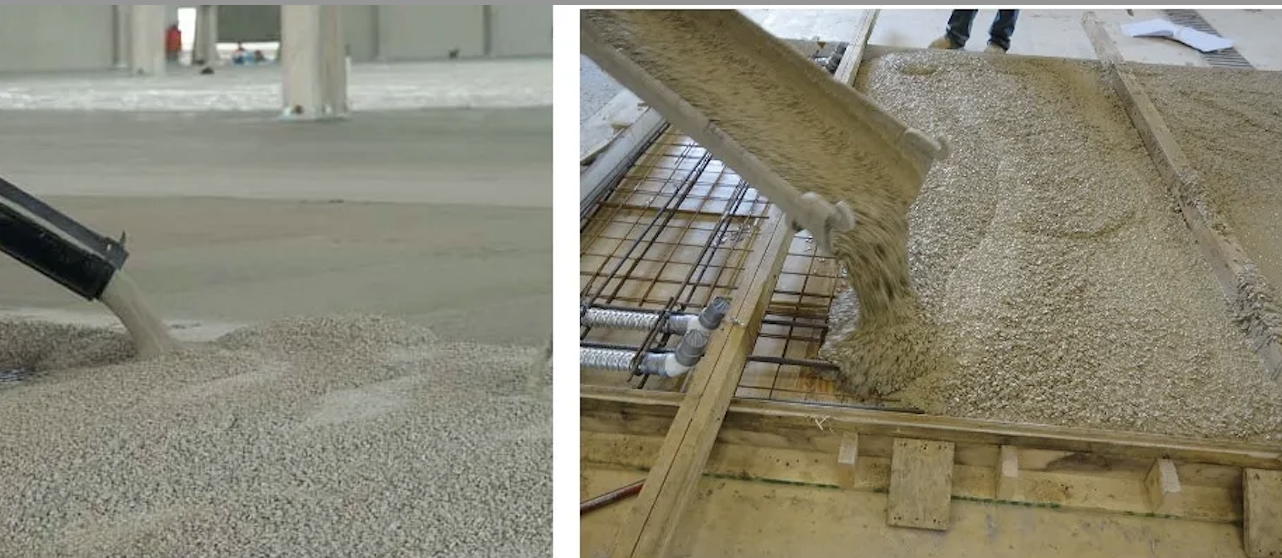
Supplementary Cementitious Materials Integration
The use of supplementary cementitious materials such as fly ash or slag can reduce internal temperatures by lowering the total heat of hydration. This is particularly important in mass concrete and extended placements. Research shows that Class F fly ash significantly slows slump loss in both plain and admixture-modified mixes, making it an effective complement to chemical admixtures under hot-weather conditions.
Strategic Admixture Combinations
Most hot-weather concreting scenarios benefit not from a single admixture but from a tailored combination. Extended transport times often require a mix of slump-retention technologies and moderate retarders to ensure the concrete arrives at the jobsite with adequate workability. Decorative concrete demands hydration-control admixtures that prevent crusting, supported by workability-retention systems to ensure stable finishing characteristics. Flatwork applications require admixtures that preserve workability during placement yet still allow timely setting, reducing the risk of plastic shrinkage cracking.
Cooling Strategies with Admixture Support
Cooling materials before batching is a highly effective way to reduce concrete temperature. Using chilled water can lower the temperature by around 10°F, while replacing a portion of mixing water with ice can reduce temperatures by up to 20°F. In extremely hot environments, liquid nitrogen injection provides rapid and controlled cooling. When these cooling methods are combined with appropriate HS admixtures, workability becomes easier to maintain and hydration proceeds at a more manageable pace.
Retempering must also be done with care. Although adding water on-site is common, it increases the water–cement ratio and decreases strength. Research shows that slump restoration using superplasticizers instead of water yields higher strength and better overall durability, even when mixing time is extended.
Addressing Plastic Shrinkage Cracking
Plastic shrinkage occurs when moisture evaporates from the concrete surface faster than bleed water can rise to replace it. High temperature, wind, and low humidity all intensify this effect. Set retarders, hydration stabilizers, and properly formulated PCE admixtures reduce internal water demand and delay early stiffening, helping the concrete resist cracking during the vulnerable plastic phase. Fibers can reduce crack width, while evaporation retardants form a temporary moisture barrier on the surface, slowing the rate of surface drying until curing begins.

Application-Specific Guidelines
Precast Concrete Manufacturing
Precast operations depend on consistency, yet materials such as white cement lose workability rapidly in high temperatures. Set-retarding admixtures become invaluable for preserving workable time and maintaining production cycle stability. Lightweight aggregates require additional attention because they absorb water quickly; they must be pre-wetted to maintain proper moisture conditions during mixing.
Ready-Mix Operations
Ready-mix concrete is especially vulnerable to hot-weather conditions because extended transport times, exposure to sunlight, and unpredictable delays all encourage slump loss. Mixer paddles may accumulate hardened material more quickly, reducing mixing efficiency. HS admixtures help maintain dispersion stability throughout transport and placement, ensuring the concrete delivered retains the performance characteristics intended during batching.
Implementation Best Practices
Effective hot-weather concreting begins with careful planning. Whenever possible, concrete should be placed during cooler hours, either early in the morning or at night. Continuous monitoring of concrete temperature and environmental conditions allows operators to make timely adjustments to admixture dosage or cooling strategy. Once concrete is placed, curing must begin immediately. On bridge decks and other exposed areas, reflective curing compounds are particularly effective in hot weather. Moisture-retaining films, windbreaks, and sunshades can further protect the concrete during its early curing period.
Conclusion: Integrated Approaches for Hot-Weather Success
Hot-weather concreting requires an intelligent combination of admixture technology, cooling methods, execution timing, and curing discipline. When these components are integrated, concrete can be placed successfully even under extreme environmental conditions. HS Company Limited brings together advanced polymer chemistry and deep field expertise to deliver admixture systems that address every stage of the hot-weather concreting process. With our solutions, contractors can manage hydration, preserve workability, prevent cracking, and achieve durable, high-performance concrete regardless of temperature.


