

13/09/2025
Why Workability Matters
Concrete workability determines how easily fresh concrete can be mixed, transported, placed, and finished without compromising strength or durability. At HS Company Limited, with more than a decade of experience, we know that poor workability is often the root cause of project delays, cost overruns, and reduced structural quality.
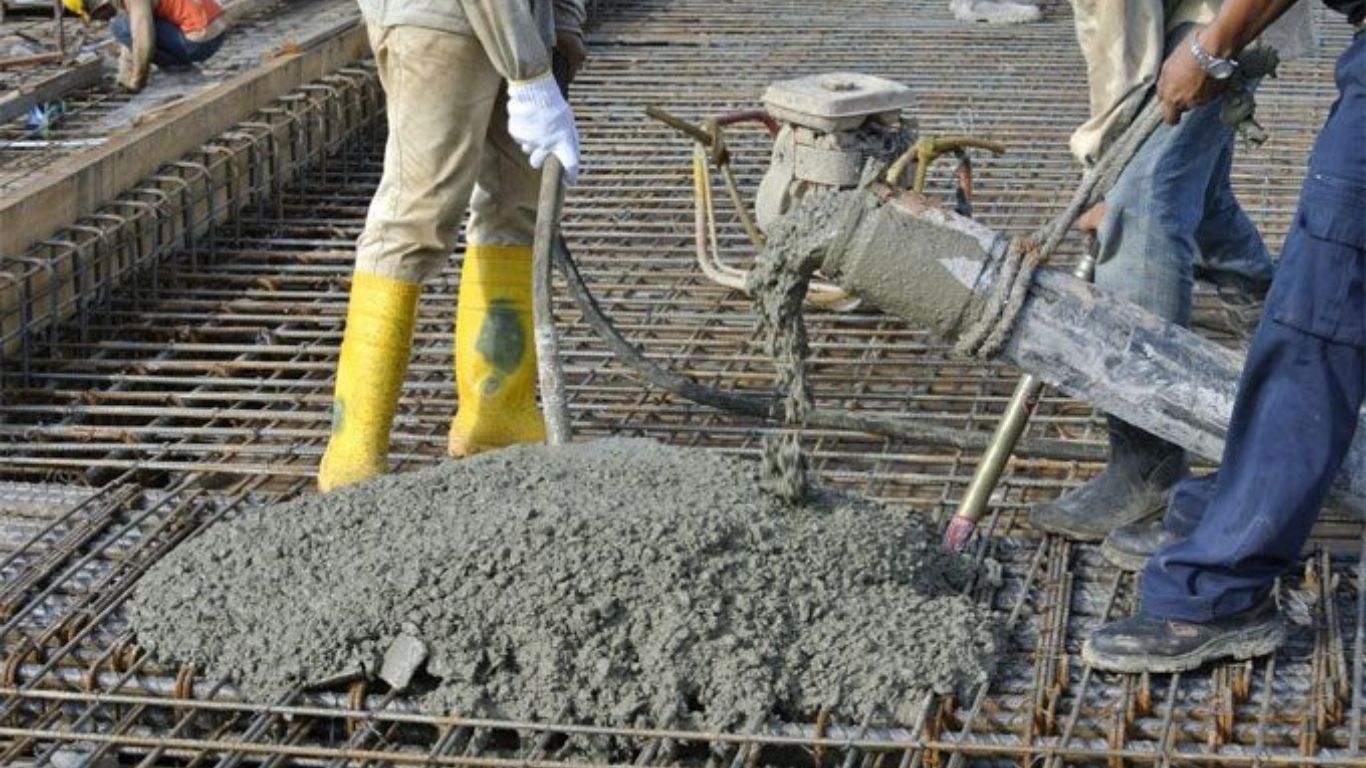
As construction grows more complex, understanding workability challenges—and how advanced admixtures provide solutions—has become essential for engineers, contractors, and ready-mix producers.
Understanding Concrete Workability
Workability refers to the ease of handling fresh concrete while maintaining cohesion and preventing segregation. It includes consistency, mobility, compactability, and finishability.
Engineers measure workability through slump tests, flow table tests, and rheological assessments. Key factors influencing it include: water–cement ratio, aggregate type, cement chemistry, ambient temperature, mixing time, and admixture selection.
Challenge 1: Slump Loss During Transportation
Fresh concrete stiffens naturally through hydration, evaporation, and water absorption. Within 30–60 minutes, slump loss can make concrete nearly unworkable, especially during extended haulage or complicated placement schedules.
Solution: High-Range Slump Retention Type admixtures are engineered to maintain workability for extended periods. Through advanced polymer design, these products slow slump loss and preserve flowability for 2–4 hours, ensuring that ready-mix concrete can be transported over long distances without segregation or premature stiffening. This guarantees smooth placement, higher quality finishes, and improved scheduling flexibility.
Challenge 2: Temperature Effects
-
Hot weather: Accelerated hydration, rapid slump loss, higher evaporation, and plastic shrinkage cracking.
-
Cold weather: Slower setting, bleeding, lower early strength, freeze–thaw risks.
Solution: Thermally-responsive admixtures.
-
Hot weather versions absorb heat and extend workability.
-
Cold-weather versions accelerate hydration while reducing bleeding.
Reference: American Concrete Institute – Hot Weather Concreting
Challenge 3: High-Strength Concrete Limitations
High-strength mixes require low water–cement ratios, making workability difficult.
Solution: PCE-based High-Range Water Reducers (HRWR) achieve 25–40% water reduction while maintaining slump, enabling concretes exceeding 80 MPa compressive strength.
Challenge 4: Segregation and Bleeding
Segregation occurs when aggregates separate, while bleeding causes water to rise to the surface.
Solution: Viscosity-modifying admixtures (VMAs) improve cohesion, and anti-bleeding agents retain water within the matrix—resulting in smoother, stronger finishes.
Challenge 5: Pumping and Placement
Pumpable concrete requires lubricity, stability, and resistance to pressure-induced bleeding.
Solution: Specialized pumping aids reduce pipeline pressure by 20–30%, prevent blockages, and maintain discharge workability.
Challenge 6: Self-Consolidating Concrete (SCC)
SCC demands flowability under its own weight without segregation.
Solution: Balanced systems combining PCE superplasticizers + VMAs + mineral additives. Intelligent polymers adjust viscosity under shear, ensuring flowability and stability.
Challenge 7: Durability with Workability
Durable concrete requires low permeability and resistance to harsh environments while still workable.
Solution: Multi-functional admixtures that enhance both durability and workability—such as crystalline waterproofers and corrosion inhibitors.
Implementation Best Practices
-
Conduct laboratory testing and field trials before full adoption.
-
Ensure correct dosage, mixing sequence, and uniform distribution.
-
Provide training on handling, storage, and safety.
-
Monitor performance continuously for quality assurance.

Economic Value of Admixtures
Although advanced admixtures increase material cost, they save significantly on labor, reduce waste, minimize rework, and improve scheduling. Considering the total cost of ownership, they often provide higher ROI than conventional solutions.
Future Trends in Workability Technology
The future of admixtures lies in:
-
Smart polymers adapt to the environment in real time.
-
Nanotechnology for superior dispersion.
-
Bio-based admixtures supporting sustainable construction.
-
Digital monitoring systems provide live workability feedback.
Reference: EFCA – European Federation of Concrete Admixtures Associations
Conclusion: Transforming Challenges into Advantages
Concrete workability challenges are inevitable—but with the right admixtures, they can be turned into strengths.
At HS Company Limited, our PCE-based admixtures and technical expertise help contractors overcome slump loss, temperature impacts, segregation, pumping difficulties, and durability concerns. By partnering with HS, construction professionals gain reliable solutions that improve performance, sustainability, and efficiency.
—————————————–
HS Company Limited – The global supplier of polycarboxylate ether (PCE) concrete admixtures.
General inquiry
Email: Info@hs-polycarboxylate.com
Tel: +84 28 5410 6840
Overseas Business
Email: export@hs-polycarboxylate.com
Tel: +84 28 5410 6840


