

12/11/2025
Introduction: Understanding PCE at the Molecular Level
Concrete technology has entered a molecular era. Polycarboxylate Ether (PCE) admixtures have redefined the behavior of cement, enabling engineers to achieve both flowability and strength that were previously considered contradictory.
Unlike older superplasticizers based purely on electrostatic repulsion, PCEs combine electrostatic forces + steric hindrance, achieving exceptional dispersion at much lower dosages.

PCE Molecular Architecture: The Comb-Shaped Innovation
PCEs feature a distinctive comb-like polymer structure composed of:
-
Anionic backbone (typically polyacrylic or polymethacrylic acid) bearing carboxylate groups;
-
Polyethylene glycol (PEG) side chains extend from the backbone via ether or ester linkages.
This structural design provides both a chemical grip and a physical shield: the backbone anchors to cement particles while side chains stretch into the aqueous phase, creating molecular “brushes” that maintain particle separation.
Infrared and NMR spectroscopy confirm the presence of carboxyl, ether, and hydroxyl functional groups, each contributing to hydration control and dispersion stability.
Molecular Weight & Precision Control
Modern PCEs exhibit molecular weights between 20,000–80,000 Da, fine-tuned through reversible addition–fragmentation chain-transfer (RAFT) polymerization.
This method ensures polydispersity indices ≈ 1.2–1.3, meaning tighter molecular weight distribution and predictable performance.
Precise molecular tailoring lets HS scientists customize flow retention, setting behavior, and compatibility for any cement system—critical for achieving both consistency and sustainability in production.
Mechanisms of Cement Particle Dispersion
Electrostatic Repulsion
The negatively charged carboxylate groups on the PCE backbone adsorb onto positively charged cement surfaces (mainly C₃A and C₄AF phases).
This interaction imparts a negative zeta potential to cement particles, creating electrostatic repulsion that prevents flocculation and improves flow.
Adsorption occurs through electrostatic and hydrogen-bonding forces, not permanent chemical bonding—allowing reversible and dynamic dispersion during mixing.
Steric Hindrance Effect
While the backbone binds, PEG side chains extend into the water phase, forming a hydrated steric barrier.
These flexible chains repel approaching particles through physical crowding and structured water layers, sustaining dispersion even under vibration or pump pressure.
Hydration Layer Formation
Ether and hydroxyl groups in PEG attract water molecules, creating a semi-rigid hydration film around each particle.
This “molecular cushion” stabilizes the suspension, ensuring homogeneous mixes and reducing bleeding risk.
Adsorption Behavior and Kinetics
Once introduced, PCE molecules adopt conformations—train, loop, and tail—along cement surfaces.
Studies show that optimal carboxyl density (~3.5 mmol g⁻¹) yields the best flowability and adsorption equilibrium.
-
Sulfonic acid and polycarboxylic acid groups accelerate the adsorption rate, extending workability retention.
-
Time-dependent adsorption allows PCE molecules to continuously re-adsorb as mixing progresses, maintaining dispersion throughout placement.
Mathematical adsorption models validated by total organic carbon (TOC) analysis enable HS R&D to predict field performance before production—saving time and resources.
Influence of Molecular Structure on Performance
Backbone Design
-
Acrylamide or dicarboxylic acid groups extend the induction period, offering better slump retention.
-
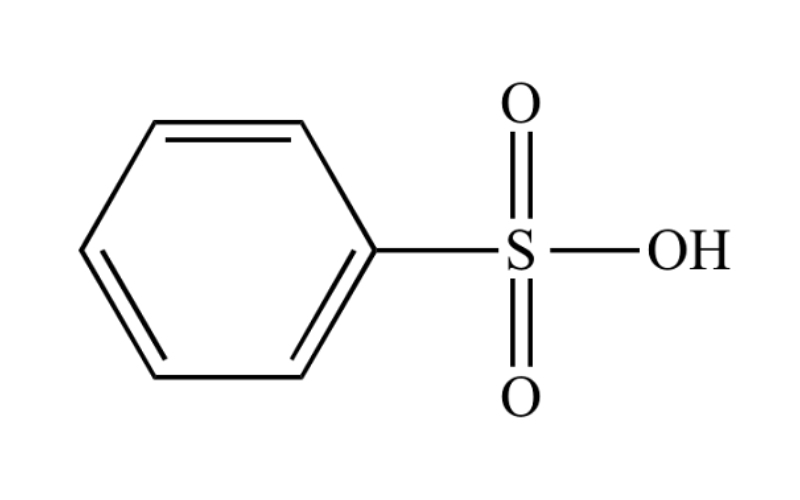
Sulfonic acid groups modify charge distribution, balancing dispersion and setting behavior.
-
Longer main chains → higher flow but greater hydration delay; shorter chains → quicker set but less retention.
Side Chain Architecture
Side chain length and density determine steric repulsion strength.
-
Longer chains → stronger dispersion and flow retention.
-
Shorter chains → better tolerance to clay contamination in aggregates.
HS designers vary both length and grafting density to achieve an optimal balance for each cement chemistry.
Charge Density Optimization
Carboxyl density controls both electrostatic repulsion and hydration delay.
Beyond an optimum, excessive charge induces polymer coiling, reducing efficiency.
Copolymers with sulfonate substitutions exhibit higher negative zeta potentials and superior dispersion stability—essential for high-alkali cement systems.
This controlled interaction enables more predictable rheology and improved retention of flowability, particularly in mixes incorporating SCMs or accelerators where charge interference is typically problematic.
Advanced Architectures for Next-Generation PCE
Hyperbranched and Star-Shaped Polymers
New designs like star-shaped and hyperbranched PCEs show 20–25 % lower dosage requirements and 10 % longer setting times compared to traditional comb structures.
Their jellyfish-like configuration offers enhanced steric coverage and lower hydration heat—ideal for mass concrete or 3D-printed mixes.
Beyond dosage efficiency, these polymer structures also demonstrate improved adaptability to diverse cement chemistries and supplementary cementitious materials such as fly ash, slag, and silica fume. Their robust molecular interaction provides consistent performance under variable temperature and mixing conditions, contributing to better flow stability during long-haul transportation or complex placement procedures. This makes them particularly valuable for infrastructure projects where precise rheology control and extended open time are critical to achieving uniform consolidation and superior surface finish.
Cross-Linked PCE Systems
Cross-linked PCEs, using PEG diacrylate bridges, generate denser adsorption layers and longer workability windows.
Gradual hydrolysis in alkaline environments releases additional carboxyl groups over time, sustaining dispersion through placement and early curing.
Interaction with Cement Hydration
PCEs influence hydration kinetics by controlling water access and crystal growth patterns.
Isothermal calorimetry and Krstulovic-Dabic models show:
-
Reduced initial hydration heat release,
-
More uniform C-S-H gel formation,
-
Improved compressive strength and microstructure density.
Through tailored formulation, HS ensures workability without over-retardation, even in high-temperature or accelerated-curing projects.
Quality Control & Performance Verification
Analytical Characterization
HS laboratories employ:
-
GPC – molecular weight & polydispersity,
-
FTIR/NMR – functional group verification,
-
Zeta potential analysis – surface charge behavior,
-
Rheometry – yield stress and viscosity profiling.
These tools link molecular design directly to concrete performance, ensuring every batch meets target flow, strength, and setting parameters.
Performance Testing
Each formulation undergoes a comprehensive evaluation suite:
rheological testing, TOC adsorption analysis, isothermal calorimetry, and microscopy of hydration products.
This multi-method approach provides a 360° view from molecular behavior to field durability.
Design Principles for Optimized PCE
| Parameter | Adjustment | Target Outcome |
|---|---|---|
| Backbone Length | Moderate DP | Long slump retention without over-retardation |
| Side Chain Length & Density | Tuned per cement chemistry | Balanced dispersion and dosage efficiency |
| Charge Type & Density | Mixed COOH + SO₃H | Stable electrostatic repulsion |
| Molecular Weight Distribution | Narrow (PI ≈ 1.2) | Consistent performance batch-to-batch |
These structure-property relationships form the foundation of HS’s formulation philosophy: scientifically engineered molecules for predictable field performance.
Customization for Diverse Applications
| Application | Desired Property | HS Design Approach |
|---|---|---|
| High Early Strength Concrete | Controlled hydration acceleration | Low molecular weight PCE with balanced charge |
| Extended Workability Mixes | Long slump retention | Long side chains + optimized grafting density |
| Self-Consolidating Concrete (SCC) | Superior rheology control | Hyperbranched PCE with low dosage |
| High SCM Content Mixes | Compatibility with fly ash/slag | Functionalized copolymers for multi-phase systems |
Conclusion: Chemistry Enabling Performance Excellence
Understanding PCE chemistry at the molecular scale reveals why these admixtures are the cornerstone of modern concrete innovation.
Their dual action—electrostatic repulsion + steric hindrance—and their precisely engineered comb-like architecture deliver unmatched dispersion, durability, and sustainability.
At HS Company Limited, our deep knowledge of polymer chemistry drives the creation of PCE formulations that consistently meet the demands of global construction standards—from high-rise to marine to precast applications.
Each molecule we design embodies our commitment to Performance through Chemistry and Sustainability through Science.


